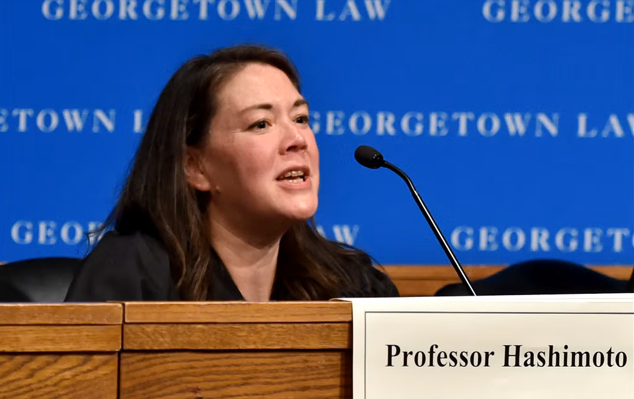
Georgetown, Washington, D.C. — Georgetown University Law Center is mourning the sudden loss of Professor Erica Hashimoto, L’97, a respected legal scholar, accomplished attorney, dedicated educator and beloved mentor whose influence extended across generations of law students and colleagues. Hashimoto, who served as the Scott K. Ginsburg Professor of Law and Appellate Advocacy, died Monday at the age of 56.
Her unexpected passing has left the Georgetown Law community heartbroken, with colleagues, students and alumni remembering her for her exceptional legal mind, commitment to justice and genuine compassion for the people around her.
Hashimoto was widely admired not only for her accomplishments in legal education and scholarship but also for the kindness, humility and personal attention she brought to her work. Throughout her career, she remained deeply committed to helping students develop the knowledge, confidence and practical skills necessary to advocate effectively for others.
A Distinguished Career at Georgetown Law
Hashimoto joined the Georgetown Law faculty in 2016, returning to the institution where she had once studied as a law student. She became director of the Appellate Litigation Clinic, the same clinic in which she had participated during her time at Georgetown.
Her return represented a meaningful connection between her own legal education and her later career as an educator. Having experienced the clinic as a student, she was able to guide future lawyers through the practical challenges of appellate advocacy while helping them understand the responsibility that comes with representing others.
As the Scott K. Ginsburg Professor of Law and Appellate Advocacy, Hashimoto contributed to the development of aspiring attorneys through teaching, mentorship and clinical legal education. Her work reflected a belief that legal training should extend beyond understanding statutes and court decisions to include the ability to use the law thoughtfully and effectively on behalf of clients.
For Hashimoto, advocacy was more than an academic discipline. It was an opportunity to make a meaningful difference in people’s lives.
An Accomplished Educator and Legal Scholar
Before returning to Georgetown, Hashimoto spent 12 years teaching at the University of Georgia School of Law. During her tenure there, she established an appellate litigation clinic, helping students gain practical experience in the preparation and presentation of appellate cases.
Her contributions to teaching earned her the Josiah Meigs Distinguished Teaching Professorship, the University of Georgia’s highest recognition for excellence in instruction.
The honor reflected the importance of her work as an educator and her commitment to preparing students for the demands of legal practice. By combining classroom instruction with hands-on experience, Hashimoto helped students develop the analytical abilities and advocacy skills essential to their professional growth.
Her career at both Georgetown and the University of Georgia demonstrated a consistent dedication to legal education. Whether establishing a clinic, teaching students to navigate complex legal questions or mentoring aspiring attorneys, she placed a strong emphasis on the practical responsibilities of the profession.
Her colleagues remembered her as someone who paired intellectual rigor with an uncommon generosity of spirit.
Georgetown Law Dean Remembers a Remarkable Colleague
Georgetown Law Dean M. Elizabeth Magill expressed deep sorrow over Hashimoto’s death, describing her as an exceptional lawyer, teacher, scholar and human being.
“Erica Hashimoto was a remarkable lawyer, teacher, scholar, and above all, human being. She brought a brilliant legal mind and a generous heart to everything she did,” Magill said.
The dean emphasized Hashimoto’s conviction that the law could change lives and her ability to instill that belief in the students she taught. Through her work, students learned to put their legal knowledge into practice in service of others.
Magill also recognized the lasting difference Hashimoto made at Georgetown Law and in the lives of the people who knew her.
“Erica made Georgetown Law better, and she made the lives of those around her richer. We are heartbroken by her loss,” the dean said.
Her remarks captured the profound sense of grief felt across the institution, where Hashimoto was valued for both her professional accomplishments and the personal relationships she built over the years.
Remembered for Her Warmth, Humor and Compassion
Beyond her academic achievements, Hashimoto was remembered as a warm and considerate colleague whose presence could make even a difficult day feel more manageable.
Professor Kristin Henning, L’02, associate dean for Clinics and Experiential Learning and director of the Juvenile Justice Clinic and Initiative, offered a personal tribute highlighting the qualities that made Hashimoto so beloved.
Henning described her as a person who combined determination with compassion, bringing warmth, humor and optimism into everyday interactions. Hashimoto, she recalled, was often among the first people she spoke with at the office, sometimes connecting even before arriving at work.
“Erica was both heart and grit all at once,” Henning said.
She recalled how Hashimoto could bring laughter and lightness to conversations, even when the colleagues were preparing to address difficult professional matters. Her ability to make others feel comfortable and supported was an important part of the relationships she developed within the law school community.
Henning said Hashimoto consistently showed interest in the well-being of others, making a point of asking how they were doing rather than allowing conversations to focus exclusively on work.
“Like sunshine, she brought warmth and light and joy,” Henning said, describing the effect Hashimoto had on those around her.
For Henning, these everyday interactions were among the most memorable aspects of their relationship. Hashimoto’s humor and kindness helped make challenging days brighter, while her thoughtfulness demonstrated how deeply she valued the people with whom she worked.
A Passionate Advocate for Justice
Henning also remembered Hashimoto’s strong sense of justice and her determination to address unfairness wherever she encountered it.
Among the qualities she said colleagues would miss most were Hashimoto’s embraces, her “healthy outrage for injustice” and her extraordinary attention to detail and strategy.
Those characteristics reflected the combination of compassion and professional discipline that distinguished Hashimoto’s work. She cared deeply about the people affected by legal decisions, while also bringing the careful analysis and strategic thinking required to pursue effective advocacy.
Her commitment to justice was evident in the way she approached her profession and in the lessons she shared with students. She encouraged future lawyers to recognize that legal representation carries responsibilities beyond the courtroom, including the obligation to treat people with dignity and to understand the consequences of legal outcomes.
For the students she mentored, that example offered a model of what it meant to practice law with both competence and humanity.
A Lasting Legacy in Legal Education
Hashimoto’s death represents a significant loss for Georgetown Law, the wider legal education community and the many people who benefited from her teaching and mentorship.
Her professional legacy includes the appellate litigation clinic she directed at Georgetown, the clinic she established at the University of Georgia and the students she helped prepare for careers in law. Her work demonstrated the value of clinical education in bridging the gap between legal theory and the practical demands of representing clients.
But her influence cannot be measured solely through titles, awards or professional accomplishments. The tributes from Magill and Henning point to another essential part of her legacy: the way she made people feel respected, encouraged and supported.
Students and colleagues knew her as someone who took her responsibilities seriously without losing sight of the human beings behind the work. Her attention to detail, warmth, humor and commitment to fairness helped shape the culture of the professional community around her.
For those who learned from her, worked alongside her or received her guidance, her example will remain an important part of her enduring influence.
Georgetown Law Community Mourns Her Passing
As Georgetown Law grieves, the memories shared by her colleagues offer a picture of a woman whose professional excellence was matched by her generosity and compassion.
Hashimoto devoted her career to preparing students to use the law in meaningful ways. She helped aspiring attorneys develop the skills to advocate for others while demonstrating, through her own conduct, the importance of integrity, empathy and respect.
Her unexpected death at 56 has brought sorrow to a community that regarded her as far more than a distinguished professor. She was a trusted colleague, a generous mentor and a source of encouragement whose daily presence made a lasting difference.
Although the loss is deeply felt, the lessons she taught and the relationships she built remain part of her legacy. Through the students she trained, the clinics she helped develop and the colleagues whose lives she brightened, Erica Hashimoto’s influence will continue to be felt.
In memory of Professor Erica Hashimoto, Georgetown Law mourns an accomplished educator and scholar whose commitment to advocacy, dedication to students and kindness toward others left an enduring mark on the institution she served. She will be remembered for her brilliant legal mind, her passion for justice and the warmth she brought to the lives of those around her.
The circumstances surrounding her death were not provided in the university statement shared here. Georgetown Law’s tribute instead centers on her life, her work and the profound loss felt by the community she helped shape.